
Egawa Hidetatsu —
A Visionary Who Shaped Japan’s Future
Nearly 200 years ago, Japan stood at a turning point in its history.
At a time when the world was changing rapidly and many people remained focused on the past, one regional leader was looking toward the future. His name was Egawa Hidetatsu.
From his base in Nirayama, in the Izu region at the foot of Mount Fuji, he eagerly embraced new knowledge and technologies, nurtured talented individuals, and laid important foundations for Japan’s modernization.
Today, the Egawa Residence is more than a historic landmark. It is a place where Japan first began to take confident steps toward the future.
An Esteemed Family with
an 800-Year Legacy
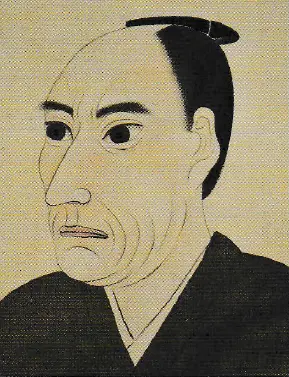
The Egawa Family supported and guided this region for nearly 800 years, dating back to the Kamakura period. During the Edo period, they served as official magistrates directly appointed by the Tokugawa Shogunate, overseeing flood control, disaster prevention, and regional administration.
Yet what made the Egawa Family truly remarkable was not merely the length of their history.
It was their willingness to embrace change. Rather than fearing new ideas, they continuously sought out knowledge, adopted new technologies, and adapted to the challenges of each era.
A Visionary Leader Ahead
of His Time
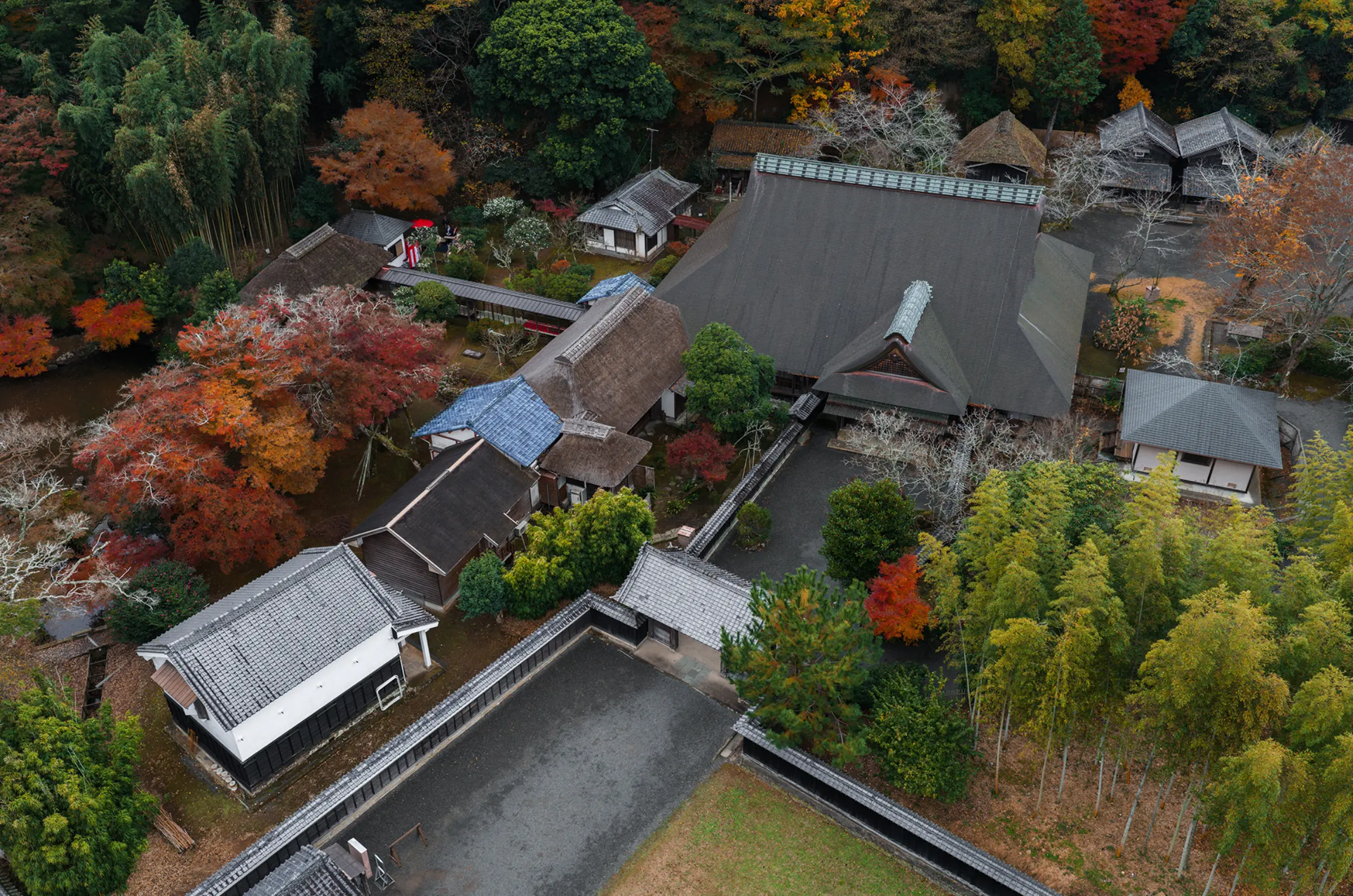
Egawa Hidetatsu (1801–1855) lived during a time when Japan was largely isolated from the outside world under its national seclusion policy.
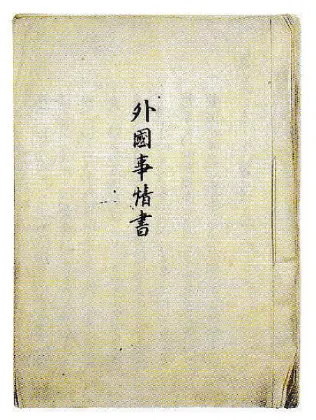
Yet he never stopped learning about developments beyond Japan's shores.
Fascinated by Western science, technology, and military knowledge, he actively sought out new ideas from abroad while continually considering how they could benefit Japan's future.
In today's terms, he might be described as an innovator who sought to transform the future from a rural corner of the country.
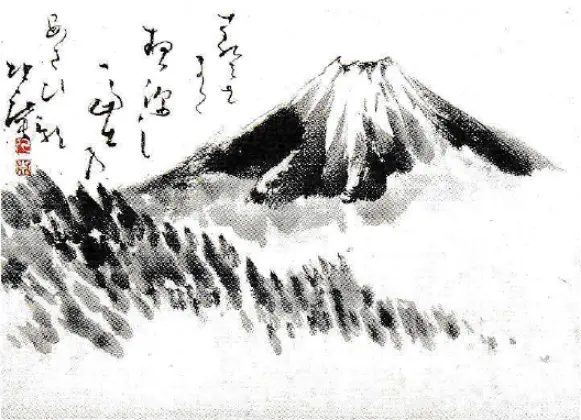
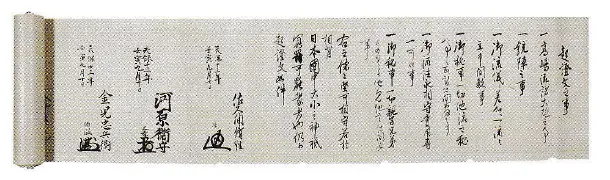
Commissioned from Watanabe Kazan
People Are the Key to the Future
More than anything else, Egawa believed in the power of people.
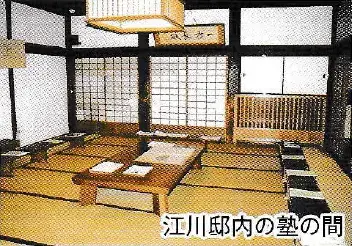
In 1842, he established the Nirayama School, a place of learning that attracted young people from across Japan. It is said that not only samurai, but also farmers and townspeople were welcomed to study there.
Many of the individuals who would later contribute to Japan’s modernization received their education in this very place.
In today’s terms, the Nirayama School was something like a leadership academy or an innovation hub—a place where future leaders were encouraged to learn, think, and shape a changing world.
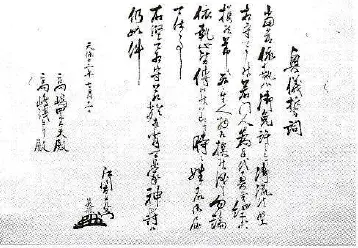
Introduction to Takashima Shūhan
A Man of Action, Not Just Ideas
Egawa Hidetatsu was not merely a thinker. He was a leader who took action.
Japan’s First Challenge in Bread Making
As Egawa Hidetatsu sought to introduce modern military practices to Japan, he recognized the value of bread as a portable and practical food for soldiers.
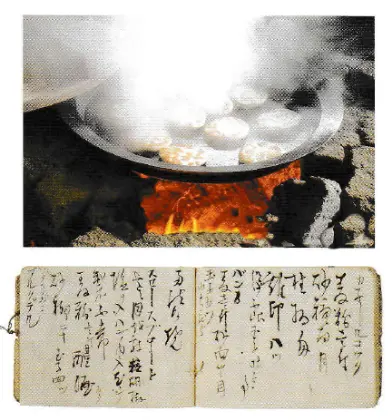
As part of military training exercises, he organized expeditions in the mountains of Izu, including Mount Amagi and Mount Eri. During these exercises, participants carried bread as their primary ration, and Egawa reportedly prohibited his students from eating anything else.
According to historical records, the first bread baked at the Egawa Residence was made on April 12, 1842 (Tenpō 13) using the estate’s kitchen furnace.
In 1952, the Japan Bread Association designated this date as Bread Day, and Egawa Hidetatsu was honored with the title “Father of Bread in Japan.”
The Challenge of Building the Reverberatory Furnaces
Even before the construction of the reverberatory furnaces, Egawa Hidetatsu had already begun casting bronze cannons using a traditional furnace within the Nirayama estate in 1842 (Tenpō 13). The first order came from Mizuno Tadakuni, a senior official of the Tokugawa Shogunate.
In 1853 (Kaei 6), following the arrival of foreign powers and growing concerns over coastal defense, Egawa was placed in charge of constructing coastal batteries in Shinagawa Bay. To produce the cannons needed for these fortifications, he was ordered to build reverberatory furnaces capable of casting modern artillery.
Construction initially began in Shimoda, but the project was later relocated to Nirayama in 1854. Although Egawa passed away before its completion, the work was carried on by his eldest son, Egawa Hidetoshi, and the furnaces were completed in 1857 (Ansei 4).
The Nirayama Reverberatory Furnaces are exceptionally rare. They are among the very few reverberatory furnaces in the world that were actually operated and still survive today. Recognized as a remarkable achievement in the history of industrial technology and modern iron production, they have been inscribed as part of a UNESCO World Heritage Site.
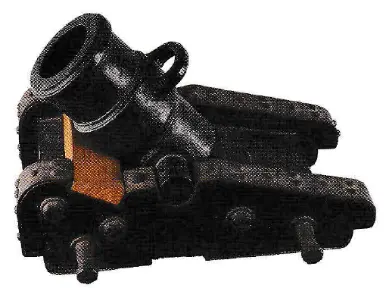
Cast at the Egawa Residence
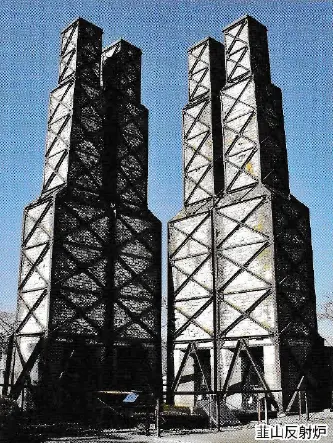
(UNESCO World Heritage Site)
The Construction of the Shinagawa Coastal Batteries
In June 1853 (Kaei 6), a fleet of American warships led by Matthew Perry arrived off the coast of Uraga and demanded that Japan open its ports to foreign trade.
Although the Tokugawa Shogunate had been informed through Dutch channels that American ships were likely to arrive, it had made few practical preparations for such an event. Perry’s arrival exposed the urgent need to strengthen the defense of Edo (present-day Tokyo).
Egawa Hidetatsu initially proposed closing the Uraga Channel, the strategic waterway between the Miura and Bōsō Peninsulas. However, the plan proved impractical due to the enormous time and cost required.
Instead, the government decided to construct a series of coastal fortifications in the waters off Shinagawa to protect Edo Castle and the heart of the nation. Egawa was entrusted with overseeing this important project.
The Shinagawa Coastal Batteries became the only major construction project completed during Egawa Hidetatsu’s lifetime, standing as a testament to his leadership and commitment to safeguarding Japan during a time of unprecedented change.
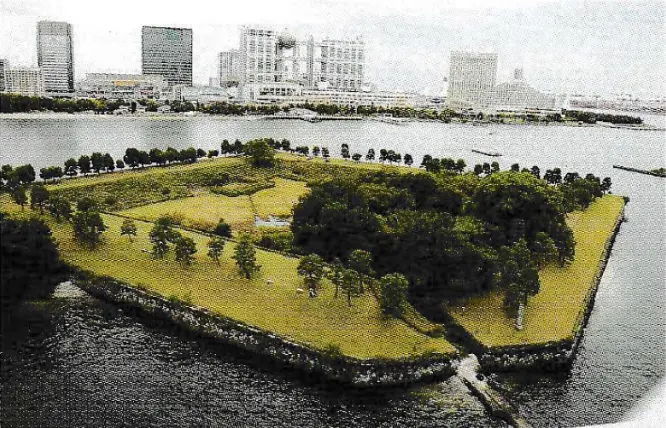
The Development of Maritime Technology That Led to the Heda
While anchored at Shimoda for negotiations leading to the Treaty of Amity between Japan and Russia, the Russian frigate Diana, commanded by Yevfimy Putyatin, was severely damaged by the tsunami triggered by the Ansei Tōkai Earthquake in 1854.
The vessel attempted to reach Heda for repairs, but was caught by strong winter winds and eventually sank off the coast near the mouth of the Fuji River.
Faced with the challenge of returning approximately 500 Russian sailors, including Putyatin himself, to their homeland, Japanese officials and local shipbuilders undertook an extraordinary project. Working together, they constructed the Heda, the first Western-style sailing ship built in Japan since the beginning of the country's long period of national seclusion.
The project became a remarkable example of international cooperation and technological exchange. Upon its completion, the Russian crew safely departed Japan and returned home via Vladivostok.
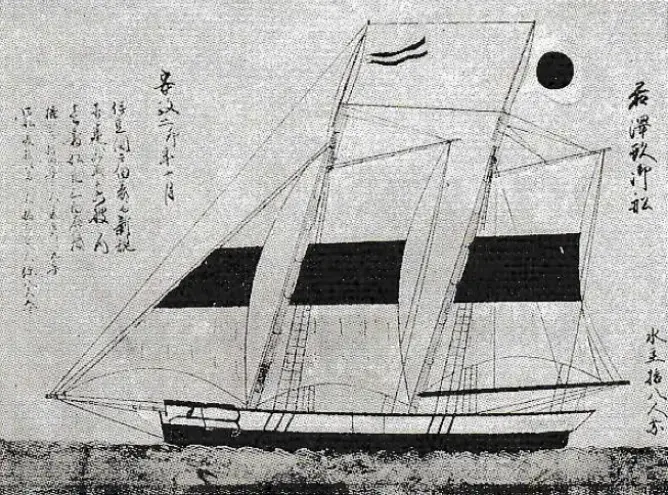
(Reproduced from The Izu Peninsula)*
Advancing Public Health Through the Introduction of Vaccination
Determined to protect people from smallpox, one of the most feared diseases of the time, Egawa Hidetatsu invited Itō Genboku, a physician who had helped introduce vaccination practices in Nagasaki, to Nirayama.
In 1850 (Kaei 3), Egawa instructed Hida Shun'an to carry out vaccinations against smallpox. Demonstrating his confidence in the new medical treatment, he first had his own children vaccinated before extending the program to local children in the Kitaema area.
This initiative reflected Egawa’s belief that new knowledge should be put into practice for the benefit of society and the well-being of future generations.
After years of tireless efforts in education, public works, military reform, technology, and public health, Egawa’s health began to decline. On January 16, 1855 (Ansei 2), he passed away at his Edo residence, surrounded by trusted colleagues including Itō Genboku and Hida Shun'an.
He was 53 years old.
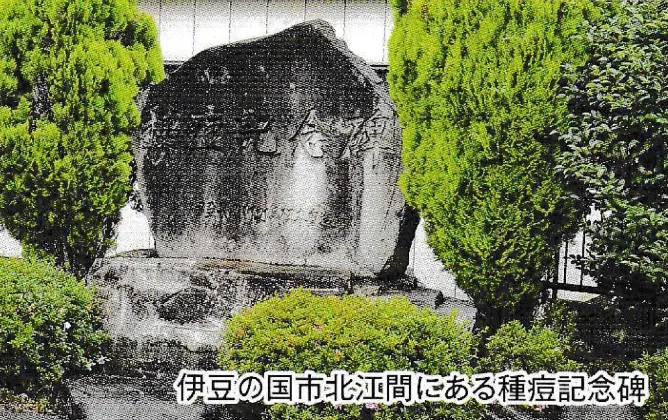
Memorial in Kitaema, Izunokuni
Why Egawa Hidetatsu Still Matters Today
Today, we too live in an age of profound change, shaped by artificial intelligence, globalization, and rapidly evolving technologies. In many ways, the world of Egawa Hidetatsu was not so different.
During the final years of the Edo period, Japan was confronted with an unfamiliar world beyond its shores. People faced difficult questions about what should be preserved and what needed to change.
Yet Egawa never turned away from the future.
His greatest legacy is not the buildings he left behind, nor the technologies he introduced.
It is the spirit of lifelong learning—the courage to embrace new ideas, adapt to change, and continue looking ahead without fear.
That spirit still lives on today at the Egawa Residence.
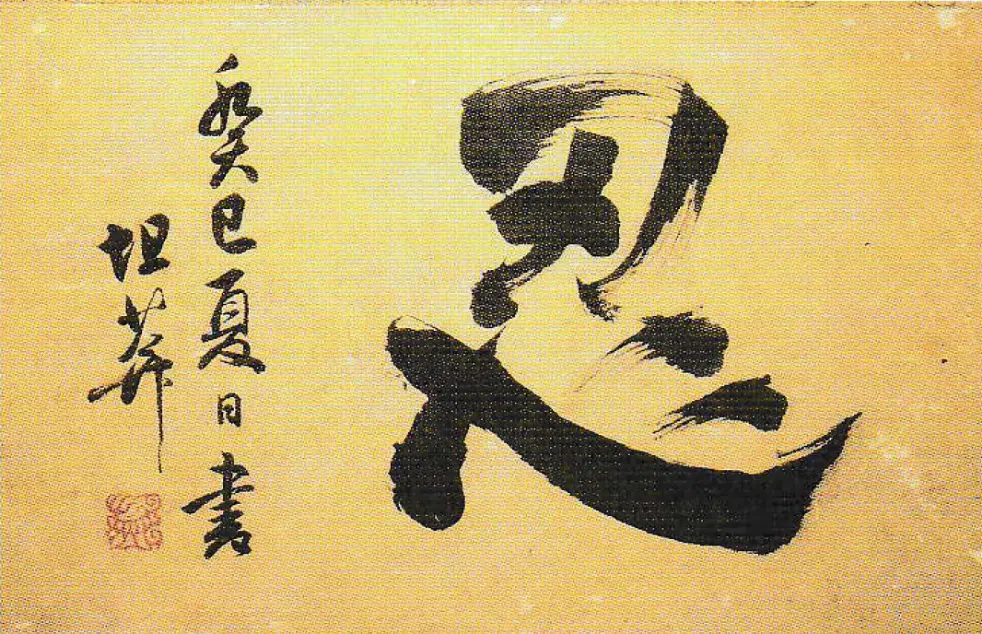
Experience the Spirit of Transformation
At Iwai Tabi, visitors can experience more than Japan’s wedding traditions and ceremonies of celebration.
This is also a place where the visionary Egawa Hidetatsu looked toward the future, embracing new ideas while respecting the wisdom of the past. Here, the spirit of both tradition and innovation continues to inspire new generations.
Surrounded by history and with magnificent views of Mount Fuji, the Egawa Residence offers a unique opportunity to reflect on life’s important milestones and the journey that lies ahead.
Why not take a moment to celebrate your own turning point in this remarkable place where history, tradition, and the future come together?